My Reflection : Group Presentations
Group Communication and Persuasion
Sarah Carmenates

Words are powerful. Words can create relationships, build bridges, spark revolutions, start or end a war, win an election, and many more. It all depends on the choice and context. When the right words are used in an appropriate context, they can bring positive outcomes such as resolving a conflict, building a meaningful relationship, or even bringing some healing to the sick. Over the past few weeks, I have often found myself reflecting on the last two presentations, one on effective group communication and the other on persuasive speaking. Even though the presentations seem different, they intertwine to bring up the key message, the power of words and effective communication.
The first presentation was mainly about effective communication as the main element that keeps a group healthy. We all belong to groups. The groups range from school study groups and work teams, which are structured formally into close-knit-knit circles that mainly consist of friends or family members. The development and purposes of these groups often vary. For instance, work teams are formally developed and mainly aim at achieving a particular work objective within a specified timeline. On the other hand, groups with friends and family members are often spontaneous and are mainly meant for social bonding. Despite these differences, one thing is constant: the ability of these groups to sustain members and achieve the desired objective depends on communication. An effective communication strategy will hold the group together, while unclear communication will eventually destroy group cohesion. As I listened to this presentation, I nodded in agreement, remembering many times in the past when I found myself in groups where strong dialogue led to remarkable team activity and in others where communication failure led to chaos. It was as if I was reliving my previous experience, understanding what had gone wrong and what was done rightfully.
Talking about reliving my past experiences, the concept of group development was also a powerful reminder of how every formal and informal group I have been part of went through the stages of group development. These stages, which I had unknowingly lived through, include forming, storming, norming, performing, and adjourning. I remembered the awkwardness in the forming stage, where group members got to learn about each other. I also remembered the challenges in the storming stage, where members always disagreed on several matters affecting the group. I must admit that this stage led to the failure of most of my groups. As I paid attention to the presentation, I realized that the 'disagreement' phase was an inevitable part of group growth. All that was needed to get past this phase was clear communication and robust conflict group resolution strategies.
The presentation emphasized the importance of a group's ability to resolve conflicts. If a group cannot prevent or resolve issues among members, it dies. As a core characteristic of a healthy group, conflict resolution requires group members to prioritize trust, transparency, and accommodating other people's views. Respecting and accommodating other people's opinions in a group stood out for me. I recalled how I had experienced many groups that broke mainly because some members felt undervalued. At the moment, I understand that groups thrive because members agree to accommodate or at least appreciate each other's perspectives. Friendships, relationships and groups last when the parties understand that the other may have a different worldview and that no one's opinion is superior.
The second presentation was about persuasive speaking. One of the key takeaways from this presentation was that mere communication is less impactful compared to structured, persuasive speaking. Persuasion is artfully inspiring people and convincing them to follow a particular direction. I was astonished that the idea of persuasive speaking was not new. Thousands of years ago, the power and secrets of persuasive speaking had been unlocked. I was particularly fascinated by the role of Aristotle's ethos, pathos, and logos in persuasive speaking.
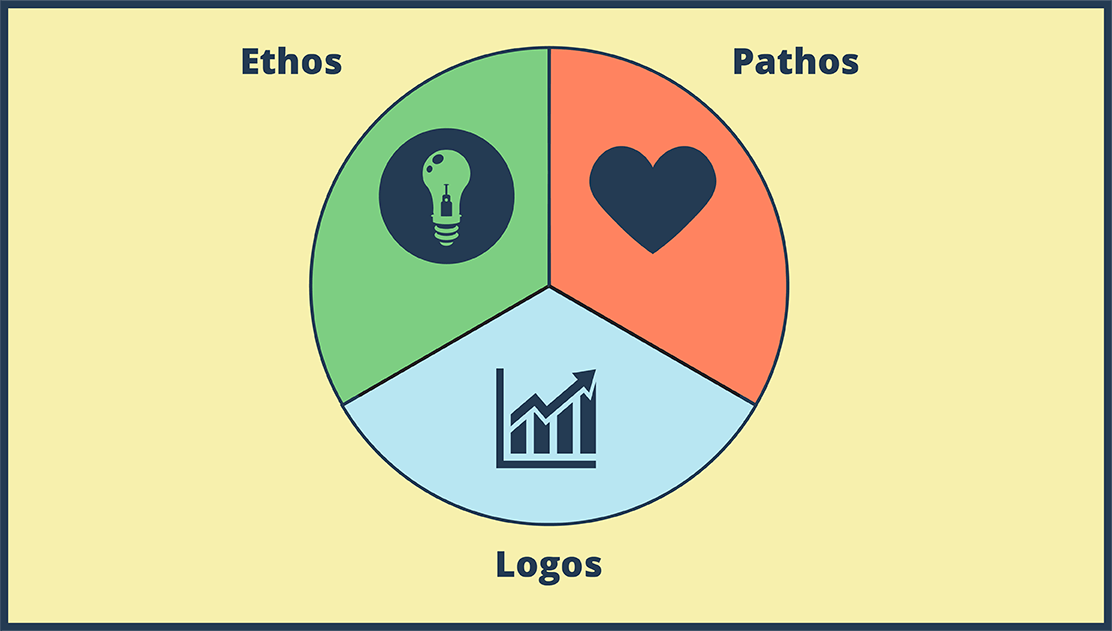
Ethos, logos, and pathos are effective rhetorical elements that significantly enhance persuasive speaking. Ethos refers to the appeal to credibility. When an individual brings up past experiences in group communication, they are employing ethos. When one refers to expert opinions to support their views, they are leveraging ethos. Listening to this piece, I realized how often I apply ethos in group conversations without even realizing it. I wondered how often I managed to persuade people simply because they trusted my expertise and how I had previously despised people because, in my view, they lacked credibility. The conversation about logos was also interesting because I enjoy structured communication. However, the most surprising finding was about pathos, people's appeal to emotions. I had previously assumed that facts and logic won arguments, yet I came across the revelation that the most powerful speeches in the world were emotionally fueled. In other words, speeches that resonate with people's emotions are more influential than those that do not. Nevertheless, all these rhetorical features are essential. One must harness logos, ethos, and pathos to be more persuasive in communication.
The connection between the two presentations was clear. Persuasion is at constant play in every group communication action. Groups thrive based on how well members are persuaded to adopt a particular strategy, handle disagreements, accommodate others, and work collaboratively. Robust group communication is about persuading group members to actively listen, engage, and take action. Reflecting on my previous group experiences, I realized that the main challenge was a lack of effective persuasion skills. If I had known then what I know now, I could have influenced my group's discussions more effectively. Moving forward, I want to be the person who influences group activities by speaking persuasively. I want to take every group conversation as an opportunity to improve my persuasive communication skills. As I embark on the journey to improve my persuasion skills, I want to be grateful for these presentations, as they have been really helpful. The presentations have changed the way I view combinations. Now, I understand the massive impact that an artful choice of words in different contexts can have.



Comments
Post a Comment